
What if the biggest risk in a DEWA shams solar installation isn’t the panels, but a mismatch between the design, equipment, and grid-connection plan? For property owners, that is a practical concern: DEWA requirements shape system design, approvals, and commissioning. A proposal is useful only when its technical scope and delivery responsibilities are clear.
This guide covers the decisions to make before committing to a project. It explains how site assessment, system design, equipment interfaces, DEWA permitting, installation, testing, and grid interconnection fit together, and how to compare proposals on an equivalent technical basis.
Follow the project from assessment to commissioning, with checkpoints for coordinating engineering, procurement, construction, and approvals. Smart Gulf Energy delivers solar PV projects in Dubai, coordinating DEWA permitting and grid interconnection within the project workflow. Use this guide to clarify scope, ownership, and technical handoffs.
Key Takeaways
- Separate the PV project’s engineering and installation scope from DEWA approval and electricity-accounting arrangements.
- Compare DEWA shams solar installation proposals using the same technical checklist: site data, array layout, inverter selection, electrical design, and grid interface.
- Set priorities based on property use, roof conditions, electricity demand, and operating schedule. Treat comparisons as planning guidance, not a substitute for site-specific engineering.
- Map the delivery sequence from design approval and procurement through installation, testing, inspection, and handover. Use current DEWA requirements to guide project documentation.
- Define EPC responsibilities for engineering, equipment procurement, construction, permitting coordination, and commissioning to keep technical handoffs aligned.
What DEWA Shams Solar Installation Covers in Dubai
A DEWA shams solar installation is a building-based photovoltaic (PV) project designed to connect to Dubai’s electricity network through the Shams Dubai programme. It combines site assessment, engineering, equipment selection, installation, testing, and grid connection. The programme sets the framework for connecting distributed solar generation. It is distinct from the physical design and construction of the system.
Approval and electricity accounting are related but separate parts of the project. The design must follow applicable DEWA requirements, while connection and metering arrangements determine how generated, consumed, and exported electricity is recorded. Under the net-metering arrangement described here, eligible surplus electricity is exported to the grid and credited to the customer’s account for future consumption, rather than paid out as cash.
This building-scale approach is part of Dubai’s wider solar strategy. The Mohammed bin Rashid Al Maktoum Solar Park provides context for the emirate’s larger DEWA-led infrastructure, while Shams Dubai connects PV systems at individual buildings. Requirements for a specific project depend on the property, proposed design, and applicable DEWA documents.
How a Shams Dubai PV system connects to a building
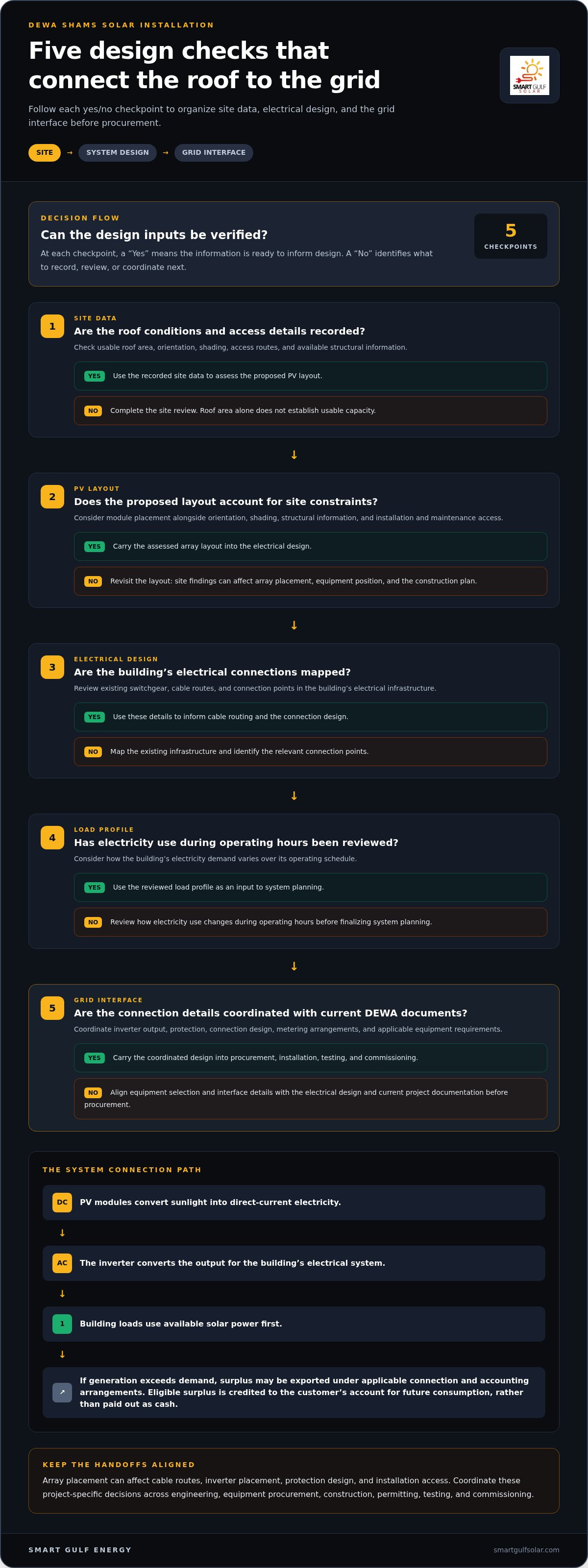
PV modules convert sunlight into direct-current electricity. An inverter converts that output into alternating current for the building’s electrical system. Building loads use available solar power first. When generation exceeds demand, the system may export the surplus to the grid under the applicable connection and accounting arrangements.
Energy flows vary with system output and the building’s electricity use. For an overview of the components and connection path, see this grid-connected solar system guide.
Who is involved in a DEWA Shams installation?
The building owner sets project objectives, provides access and relevant site information, and makes decisions about the proposed scope. DEWA governs the programme and connection requirements. The project’s solar EPC contractor develops the technical design and coordinates permitting and installation, while equipment suppliers provide the selected PV modules, inverters, and related components.
Facilities and electrical teams help coordinate access, operating constraints, and work around the building’s existing systems. EPC delivery can bring engineering, procurement, construction, testing, and commissioning together under a coordinated project scope. That coordination connects design decisions with equipment interfaces, site work, and the eventual grid connection.
DEWA Shams Solar Installation: Technical Design and Equipment Interfaces
A sound DEWA shams solar installation starts with the building, not a standard equipment package. Site conditions, electricity demand, existing infrastructure, and the proposed grid connection shape the design together. Treat them as connected decisions: moving an array can affect cable routes, inverter placement, protection design, and installation access.
Use this checklist to structure the initial technical review:
- Site data: Record usable roof area, orientation, shading, access routes, and available structural information.
- PV layout: Assess how module placement and site constraints affect the proposed array.
- Electrical design: Map cable routes, connection points, and the building’s existing electrical infrastructure.
- Load profile: Review how electricity use varies during operating hours to inform system planning.
- Grid interface: Coordinate inverter output, protection, connection design, and metering arrangements.
Which site and electrical details shape the design?
Roof area alone does not establish usable capacity. Orientation, shading, installation and maintenance access, and structural information all influence the layout. Existing switchgear, cable routes, and the building’s consumption profile provide further design inputs. For example, a roof section with good solar exposure may still be unsuitable if structural constraints or limited access affect installation. Site findings can change the array layout, equipment position, and construction plan.
How do PV modules, inverters, protection, and metering work together?
PV modules produce direct-current electricity, and an inverter converts it for use by the building’s electrical system. Protection equipment and metering are part of the connection interface, so their selection and coordination must match the complete design. Check the DEWA technical equipment standards and current project documents to assess eligible equipment and applicable requirements.
Keep project-specific engineering distinct from programme-wide requirements. Equipment ratings, system configuration, and interface details depend on the building and design, so do not assume one specification suits every site. Before procurement, align module and inverter selections with the electrical design, protection approach, metering arrangement, and current DEWA documentation. A coordinated EPC scope carries those decisions from engineering into procurement, installation, testing, and commissioning.
For a project-specific technical scope, review solar EPC project delivery alongside the site and grid-interface requirements.
Compare Shams Installation Priorities Across Property Types
Property type changes the questions a project team needs to resolve. A villa, office, and industrial facility can differ in occupancy, daytime electricity use, roof access, and tolerance for disruption. The comparison below is planning guidance. It does not replace site-specific engineering or DEWA review, and it does not establish separate approval routes or universal capacity limits.
| Property type | Use and load considerations | Roof and access priorities | Coordination focus |
|---|---|---|---|
| Residential | Consider occupancy patterns and how household demand changes through the day. | Review usable roof area, shading, safe access, and constraints from existing roof features. | Plan installation around household access and the building’s existing electrical connection. |
| Commercial | Map business hours, daytime loads, and areas with different operating schedules. | Assess access arrangements, roof use, and coordination with facilities operations. | Align the proposed system with building electrical infrastructure and ongoing operations. |
| Industrial | Understand operating schedules, major loads, and the importance of continuity for site processes. | Review roof conditions and access alongside the requirements of active site operations. | Coordinate across electrical systems, site teams, and planned work windows where needed. |
Residential rooftops versus commercial and industrial sites
For a home, occupancy and roof access may guide the design discussion. At a business or industrial site, load patterns and operating continuity can involve facilities, electrical, and operations teams. More complex sites may need broader coordination across existing electrical systems. These are project-planning differences, not a substitute for checking the current DEWA requirements for the installation.
How to compare technical proposals on equal terms
Compare scope, not just the headline system description. Each proposal should make its assumptions and exclusions clear, so you can assess the same project boundary across bids.
- Engineering: Check which site assessments, design work, and drawings are included.
- Equipment: Compare the equipment schedule and how components interface with the proposed electrical design.
- Installation: Identify the work included, site coordination responsibilities, and stated exclusions.
- Closeout: Review provisions for testing, commissioning, required project documentation, and handover.
An omitted interface or handover responsibility can make scope comparisons misleading. Use the DEWA-approved contractor checklist as a companion when assessing project delivery. For a DEWA shams solar installation, a like-for-like comparison clarifies who owns each step, from design and procurement through testing and commissioning. Use current DEWA guidance and project review for formal technical requirements.
Installation and Inspection: Technical Checkpoints from Site Work to Handover
A reliable installation sequence carries the design intent from procurement through grid connection. For a DEWA shams solar installation, treat each stage as a handoff: the approved design informs equipment orders, procurement records confirm what arrives on site, and installation and test evidence document what was built. Keep project-planning checkpoints distinct from DEWA’s formal approval, inspection, and metering steps, which must follow current programme instructions.
What should be coordinated before installation begins?
Before site work, align the approved design and equipment schedule with procurement, site access, safety planning, and the installation sequence. Check that procured equipment matches the engineered design and applicable programme requirements. If site conditions require a change, route it for technical review and approval as applicable. Informal field substitutions can leave drawings, equipment records, and installed interfaces out of sync.
A practical readiness review can cover:
- Design basis: Current drawings, equipment schedules, and relevant approval records.
- Site coordination: Access arrangements, work areas, installation sequence, and coordination with building operations.
- Procurement: Equipment identification and documentation matched against the design.
- Change control: A clear route to assess and record any proposed deviation before installation.
What happens during testing, inspection, and commissioning?
After installation, the project team checks the system against its design and records the results. Checks can include visual and functional reviews of installed equipment, electrical connections, protection, and system interfaces, along with documentation for inspection and handover. Prepare relevant design and equipment records, test results, and required project forms. Then verify current DEWA requirements for inspection evidence and the formal meter-connection sequence.
Commissioning verifies that the installed system operates as designed and that its grid interface is ready for the next formal connection steps.
Closeout should capture the final system configuration, test and commissioning records, and project handover information. If site changes occurred, make sure the records reflect the installed arrangement. The DEWA net metering application guide covers the application process. Use current DEWA instructions for formal approval and inspection milestones.
Bring design, procurement, site work, testing, and commissioning under one coordinated solar EPC scope. Plan your solar EPC installation with clear technical handoffs from the start.
Deliver a DEWA Shams Solar Installation with Clear EPC Ownership
A Shams Dubai project has multiple handoffs: feasibility findings shape the design, the design drives procurement, and the procured equipment must match the installation and commissioning plan. A clearly defined EPC scope connects these stages and assigns responsibility for the interfaces between them. That makes delivery easier to manage without implying a guaranteed approval, saving, timeline, or project outcome.
What end-to-end EPC coordination brings to the project
Under a coordinated EPC scope, one project team can carry decisions from site assessment and engineering into equipment procurement, construction, testing, and commissioning. DEWA permitting coordination and grid interconnection form part of this delivery work, while formal approvals remain subject to DEWA’s applicable requirements.
Define the scope before work begins. Record who owns design inputs, equipment schedules, site coordination, testing records, and handover documents. Clear boundaries also help teams manage changes: if site conditions affect a design choice, technical review can flow through to procurement and construction instead of being handled as an isolated field decision.
For building owners and facilities teams, clear ownership helps answer practical questions: which deliverables are included, who coordinates access, how equipment interfaces are managed, and what evidence will be provided at handover? Smart Gulf Energy is a Dubai-based solar EPC contractor operating since 2005. Its project work covers engineering, procurement, installation, testing, commissioning, permitting coordination, and grid interconnection.
Plan the next step for a Dubai solar project
Prepare information that can ground an initial project discussion: available site or roof details, electricity-use information, operating schedules, known access constraints, and existing electrical documentation. These inputs help frame feasibility and identify technical questions to resolve before design and procurement advance.
Next, align the proposed solar PV EPC scope with the building’s conditions and delivery needs. Set out responsibilities for engineering, equipment coordination, installation, DEWA permitting, testing, commissioning, and handover. Keep current programme documents central to technical and approval decisions.
Ready to define the scope for a Dubai solar project? Discuss your solar project with Smart Gulf Energy.
Move Your Shams Dubai Project from Assessment to Delivery
A successful DEWA shams solar installation depends on more than choosing PV equipment. Site conditions, building loads, equipment interfaces, current DEWA requirements, and clear delivery ownership all shape the project. Compare proposals on equivalent scopes, then track handoffs from engineering and procurement through installation, testing, and commissioning.
Smart Gulf Energy is a Dubai-based solar EPC contractor operating since 2005. Its end-to-end project scope connects engineering and procurement with installation and commissioning, aligning technical decisions with delivery responsibilities.
Bring together available roof and site information, electricity-use patterns, and operational requirements to frame the next steps. Discuss your solar project with Smart Gulf Energy and move forward with a clearer technical scope and delivery plan.
Frequently Asked Questions
What is DEWA Shams Dubai?
Shams Dubai is DEWA’s programme for connecting solar photovoltaic systems installed on buildings to Dubai’s electricity network. A project combines the physical PV system, its grid connection, programme approvals, and electricity accounting. Solar generation can serve the building’s electrical loads, while eligible surplus can be exported to the grid under DEWA’s applicable arrangements. The programme framework is related to, but distinct from, the project’s engineering and installation scope.
What technical requirements apply to a DEWA Shams solar installation?
Requirements depend on the building, system design, and current DEWA documents. A DEWA shams solar installation needs coordinated decisions on site conditions, PV layout, inverter selection, electrical design, protection, metering, and the grid interface. Check equipment eligibility and applicable ratings against current DEWA requirements rather than relying on a generic specification. Roof conditions, shading, existing electrical infrastructure, and the building’s load profile all inform the project design.
Does a Shams Dubai installation require DEWA approval before installation?
Plan for DEWA review and applicable approvals before physical installation proceeds. The project team coordinates the technical submission and permitting process, then carries the approved design into procurement and site work. The approval steps and sequence can depend on current DEWA procedures, so use the latest programme instructions for formal milestones. Route any change to the approved design for technical review rather than making an informal site substitution.
Can commercial buildings install solar under Shams Dubai?
Yes. Commercial buildings can install building-based solar PV through Shams Dubai, subject to applicable DEWA requirements and project review. Design priorities depend on the site: an office may have a different daytime load and operating schedule from a warehouse or industrial facility. Roof area, access, shading, existing electrical systems, and operating continuity help shape the layout and installation plan. Commercial projects require site-specific engineering rather than a standard design.
What happens during DEWA inspection of a solar installation?
Inspection forms part of the formal review before the system proceeds through applicable connection steps. The project team should prepare design and equipment records, installation details, test results, and other evidence required by current DEWA instructions. Project testing and commissioning check that installed components and electrical interfaces operate as designed. Follow the current DEWA process for the precise inspection scope and meter-connection sequence.
How does net metering work with Shams Dubai solar?
Solar electricity is used by building loads as it is generated. If the system produces more than the building is using, eligible surplus can be exported to DEWA’s grid and credited to the customer’s account to offset future consumption. The customer is not paid directly for surplus electricity. DEWA’s metering arrangement records system generation and electricity exchanged with the grid. Confirm current metering requirements during design and approval.
How long does a DEWA Shams solar installation take?
A complete DEWA Shams solar installation can take a few months, depending on the site, design, approvals, equipment procurement, installation, and connection steps. The work typically moves through assessment, design and permitting, ordering, on-site installation, inspection, and interconnection. Installation itself may be shorter than the preceding coordination and approval stages. Treat any preliminary schedule as project-specific, and include current DEWA milestones in delivery planning.


