

What if the DEWA net metering application is not just a form, but one part of coordinating a solar project from design through grid connection? That distinction matters. An incomplete technical package or unclear handoff can slow progress, and approval alone does not mean a solar system is installed or ready to export power.
If you’re unsure whether your property qualifies, what information to prepare, or who submits each item, start by clarifying the process. Under Shams Dubai, applications go through DEWA’s Hab Reeh platform, and a DEWA-enrolled contractor submits the application and technical documents for review. The project then moves through approval, installation, inspection and meter connection.
This guide walks through the process step by step. You’ll learn what project details to gather, how the owner and contractor coordinate a submission, and how approval fits into installation and final connection. You’ll also see how system sizing, technical drawings and other approvals affect preparation, so you can set realistic expectations and address gaps before the project moves forward.
Key Takeaways
- Treat the DEWA net metering application as one stage in a project sequence, not as permission to install or connect immediately.
- Gather site and project information early so the solar design and technical submission can be coordinated.
- Assign clear responsibility for each task, from preparing project details to submitting documents and following up.
- Check DEWA’s current guidance before relying on portal instructions, document lists, inspection steps or timelines.
- Plan for approval, installation, testing, inspection and grid connection as separate milestones.
What a DEWA net metering application covers for Dubai solar projects
A DEWA net metering application is part of the approval pathway for a solar photovoltaic (PV) system that will operate in parallel with Dubai’s electricity grid. It gives DEWA project and technical information to assess the proposed connection. It is not the installation itself, and approval does not confirm that the system is ready to export electricity.
Keep the milestones separate: application and technical review, physical installation, inspection and testing, then grid connection. The sequence, submission requirements and approval gates depend on current DEWA guidance and the project. Before scheduling procurement or construction around an assumed approval date, confirm the process that applies to the site.
What net metering means in the DEWA solar context
Under the Shams Dubai program, a grid-connected PV system can supply a site’s electrical loads while interacting with the grid. At a given time, the site may use the electricity generated, send surplus to the grid, or draw electricity from the grid when solar output is insufficient. For a general explanation of what net metering is, see the underlying concept, but don’t assume billing rules are identical across jurisdictions.
Generation, on-site consumption and exported energy are separate quantities. Their measurement and billing treatment depend on current DEWA requirements and the project’s approved configuration. Confirm the latest official rules for export credits, billing and any settlement terms before using them in a business case.
Who should understand the application pathway
Property owners, commercial facilities teams and project decision-makers all need a clear view of the process. A warehouse roof, an office building and a multi-building site can raise different design and coordination questions. Site conditions, existing electrical infrastructure, proposed system size and engineering choices all shape the technical information needed for review.
Check eligibility and submission requirements against current DEWA guidance. The Shams Dubai process applies to Dubai; don’t assume its forms, approvals or connection requirements apply in Abu Dhabi or another emirate. Projects elsewhere must follow the relevant local authority’s process. For a Dubai site, decide who will coordinate the technical package and track each milestone before moving from concept to delivery.
How the DEWA application connects to solar design and technical review
The DEWA application is based on a proposed system, not a generic form. Site conditions, electrical information and preliminary engineering shape the design and the technical package submitted for review. A change to capacity, equipment or electrical configuration can affect several project documents, so keep the design and application records aligned.
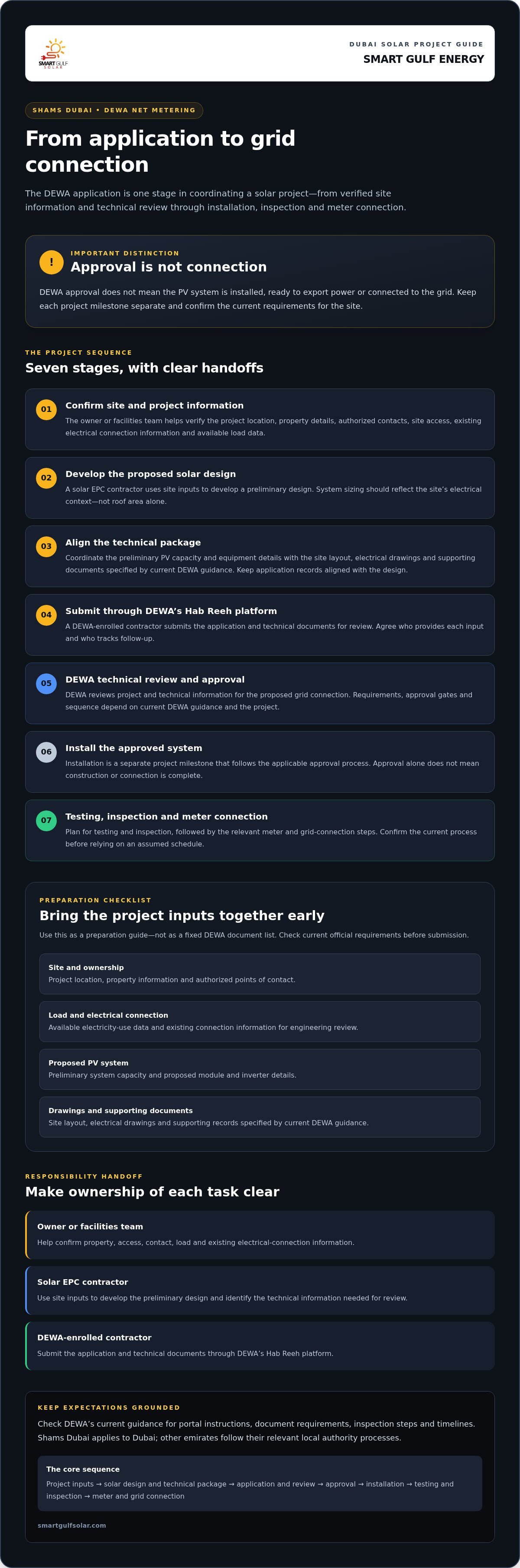
The application is one milestone in the grid-interconnection workflow: it connects project data and engineering design to DEWA’s review, then to installation and connection activities.
Project information to assemble before submission
Start with a verified picture of the asset. The owner or facilities team can help confirm property and ownership details, site access, existing electrical connection information and available load data. The solar EPC contractor can use these inputs to develop a preliminary design and identify the technical information DEWA currently requires.
- Site and ownership details: Confirm the project location, property information and authorized points of contact.
- Load and connection information: Gather available electricity-use and electrical-connection data for engineering review.
- Proposed PV capacity and equipment: Record the preliminary system size and proposed module and inverter details.
- Drawings and technical documents: Prepare the site layout, electrical drawings and supporting documents specified by current DEWA guidance.
This is a preparation checklist, not a fixed DEWA document list. Required forms, drawings, equipment information and supporting records may change or vary by project. Confirm current requirements before submission, and resolve gaps between site records and design assumptions early. Reliable inputs help the owner and contractor prepare a consistent package.
How engineering decisions affect the review
System sizing should reflect the site’s electrical context, not roof area alone. Inverter selection, protection arrangements and the electrical design also affect how the proposed PV system interfaces with the facility and the grid. The contractor develops these elements against current DEWA requirements; this guide does not set technical limits or replace the applicable documents.
Make responsibilities explicit. The owner supplies accurate asset information and confirms project decisions. The solar EPC contractor develops the design and coordinates the technical submission through the relevant DEWA process. Under the current route, verify that the contractor is DEWA-enrolled and agree who will manage correspondence and revisions.
If equipment or design changes after submission, check whether DEWA requires an updated package or further review. Don’t assume an earlier submission covers a revised design. Owners looking for coordinated engineering and project delivery can explore solar PV EPC delivery to bring these workstreams into one project workflow.
DEWA application route or self-managed coordination: compare responsibilities
“Self-managed” can mean that the owner coordinates project information, approvals and internal decisions. It does not necessarily mean the owner can submit the technical application directly. Under the current DEWA process, confirm who is authorized to submit and what role an enrolled contractor must perform before choosing a workflow.
Permitting is easier to manage when each task has a named owner, a due point and a record of decisions. The division of work still depends on the project and the agreed contract scope.
| Responsibility | Owner-led coordination | EPC-supported workflow | Confirm with DEWA |
|---|---|---|---|
| Site access and authorization | Owner or asset manager provides access, ownership or authorization records, and internal approvals. | Contractor identifies the project inputs needed and coordinates site information within the agreed scope. | Which authorization documents and applicant details are required. |
| Project data and design | Owner gathers available facility, load and connection information; technical design support must be assigned. | EPC contractor may coordinate engineering, equipment information and drawings for the proposed system. | Current submission documents, technical criteria and review process. |
| Application and follow-up | Owner tracks responsibilities and decisions while confirming the authorized submission role. | Contractor may prepare and submit the application and coordinate responses, if included in scope and permitted by DEWA. | Current contractor enrollment, submission responsibilities and communication route. |
| Installation through closeout | Owner coordinates internal stakeholders and site readiness. | Contractor may coordinate procurement, construction, testing and commissioning under the contract. | Required approvals, inspection steps and connection gates. |
What the property owner or asset manager remains responsible for
Set the project direction. Confirm site access, ownership or authorization records, objectives and internal decision approvals. Assign one contact to review submissions, answer project questions and route decisions to the relevant facilities or finance stakeholders.
Agree how design revisions and approval updates will be communicated. For example, identify who must review a proposed equipment change before it appears in project documents. This creates a clear, traceable handoff without assuming the owner performs technical design or submits documents directly.
What an EPC contractor can coordinate
Depending on the agreement, an EPC contractor can connect engineering and procurement with permitting, construction, testing and commissioning. The contract should specify who prepares and submits documents, responds to DEWA comments and tracks changes. Don’t assume every EPC engagement includes every application task.
Check contractor status and scope independently. Use the DEWA-approved solar contractor checklist to frame your questions, then verify current enrollment through DEWA’s official information. For a DEWA net metering application, clear task ownership reduces coordination gaps, but it does not guarantee approval.
How to prepare and track a DEWA net metering application
Use a controlled sequence to keep project inputs, design documents and DEWA correspondence aligned. Before submission, verify the current portal route, service names, forms, attachments, inspection requirements and any published service timelines against DEWA guidance. Treat these details as subject to change, not as a permanent checklist.
- Confirm current requirements. Check eligibility, submission roles and document requirements with DEWA. Agree who is responsible for filing and responding.
- Collect project data. Assemble applicant authority, site details, available load and connection information, project scope and access requirements.
- Develop the design. Have the appointed technical team align the proposed system design, equipment information and drawings with current requirements.
- Check readiness. Cross-check project data, drawings and equipment schedules. Resolve inconsistencies and record open questions for DEWA or the appointed contractor.
- Submit and track. The authorized party submits through the currently applicable route and records the date, reference and documents sent.
- Respond and coordinate next stages. Log review comments, assign responses, control revisions and confirm the current process for installation, inspection, testing and connection.
Complete, consistent project information can help reduce avoidable clarification cycles. It does not guarantee approval, but it gives reviewers and project teams a clearer basis for assessing the submission.
A practical submission-readiness checklist
- Confirm the applicant’s authority to proceed and the accuracy of site and ownership details.
- Check that the proposed system scope matches the latest design and equipment schedule.
- Verify required drawings, forms and attachments against current DEWA guidance.
- Record unresolved technical or administrative questions and identify who will confirm each answer.
Don’t rely on an old application pack or assume a document list from another project still applies. The portal route, attachments and review requirements may change or depend on the project, so verify them before submission.
What happens after submission
DEWA review may lead to requests for clarification or document changes. Confirm the current response process, assign each comment to an owner and track the reply against the exact document revision submitted. Keep a record of what changed and when.
Approval is not the same as installation completion or permission to connect. Track review status separately from construction, inspection, testing and final connection, and confirm the required gates with DEWA and the appointed contractor. To coordinate technical and delivery workstreams, explore solar PV EPC project support.
Move from DEWA approval to installation and grid connection
Approval moves the project into delivery, but it does not by itself confirm that construction can begin or that the system may operate in parallel with the grid. Before work proceeds, the owner and EPC contractor should verify which approvals and conditions apply, then confirm current DEWA requirements for installation, inspection and connection.
Use a controlled handoff. Match the approved design and equipment information to procurement and site work. If a change becomes necessary, record it and confirm whether DEWA review or an updated submission is required before proceeding. Don’t assume the original approval covers a revised scope.
Coordinate installation, inspection, and commissioning
Installation is followed by project closeout activities that may include inspection, testing, commissioning and interconnection. Confirm the exact DEWA gates, sequence and required evidence for the specific project. Installation alone does not authorize operation or grid export.
Keep the closeout record organized as work progresses. Depending on current requirements and project scope, this may include as-built information, equipment records, test results and responses to inspection findings. Assign an owner to each item, track outstanding questions and confirm what is required before moving to the next milestone.
- Before installation: Confirm applicable approvals, project scope and equipment details.
- During delivery: Record design changes and maintain current project documents.
- At closeout: Track testing, inspection responses and the steps required before interconnection or operation.
This structure keeps permitting, procurement, construction and commissioning on one coordinated plan. It also helps the owner distinguish physical progress from DEWA’s formal connection requirements.
Choose a delivery partner for end-to-end execution
Assess a prospective EPC partner against the work the project needs: engineering, permitting coordination, procurement, construction, testing, commissioning and grid-interconnection coordination. Confirm the contractor’s current DEWA enrollment independently, and define responsibilities, document control and change communication in the contract. A broad service description is not a substitute for a clearly defined scope.
For wider context on engineering and delivery responsibilities, review this commercial solar EPC engineering guide. Smart Gulf Energy has operated since 2005 and can include DEWA permitting, installation, testing, commissioning and grid interconnection within its turnkey solar EPC scope. Project stakeholders can discuss site-specific solar EPC requirements and clarify the work needed for their asset.
Put the next project milestone in motion
A well-managed DEWA net metering application starts with accurate site and project information, then moves through technical review, installation, inspection and grid connection. Treat each as a distinct milestone. Confirm current DEWA requirements and clarify who owns each submission, response and project decision.
For commercial and industrial assets, coordinated delivery can bring permitting, engineering and construction activities into one workflow. Smart Gulf Energy is a Dubai-based solar EPC contractor operating since 2005. Its turnkey scope can include DEWA permitting, installation, testing, commissioning and grid interconnection, with responsibilities defined for the project.
Ready to review your site requirements and delivery scope? Discuss your DEWA solar project with Smart Gulf Energy. Clear responsibilities and a practical sequence can help your team move forward with confidence.
Frequently Asked Questions
What is a DEWA net metering application?
A DEWA net metering application is the approval process for connecting a solar PV system to Dubai’s electricity grid under the Shams Dubai program. DEWA’s current online service, “Getting Solar Permits & Connections,” is accessed through Hab Reeh and brings solar permit and connection processes together. Application review is one project milestone, separate from installation, inspection, testing and grid connection. Confirm current service requirements before preparing a submission.
Who can apply for net metering with DEWA?
Property owners and authorized representatives should first confirm site eligibility and applicant authority against current DEWA requirements. For grid-connected solar PV, the application and technical documents are submitted by a DEWA-enrolled Electrical and DRRG Solar PV Consultant or Contractor. Commercial applicants should prepare ownership or authorization records, site information and internal approvals, then agree who will provide each input and coordinate with the contractor.
What documents are required for a DEWA solar application?
The DEWA submission can include applicant and site details, proposed system information, equipment data and technical drawings. The exact package depends on current DEWA guidance and the project. The appointed DEWA-enrolled contractor submits the application, technical documents and drawings for review. Before submission, keep a document register, check that drawings and equipment schedules match the design, and confirm the latest requirements through Hab Reeh or DEWA.
How long does DEWA approval take for a solar application?
There isn’t a single approval timeline to assume for every project. Review duration can depend on the submission, technical assessment and whether DEWA requests clarification or design updates. Check for a current service target before adding dates to a project schedule. Record the submission date, reference, feedback and response dates, and ask the project coordinator to update the schedule when DEWA provides formal instructions.
Can I submit a DEWA net metering application without a solar contractor?
For a grid-connected solar PV project under Shams Dubai, DEWA’s current process requires an enrolled Electrical and DRRG Solar PV Consultant or Contractor to submit the application and technical package. Confirm the contractor’s current enrollment and agreed responsibilities before proceeding. The owner still provides accurate site and authorization information, makes project decisions and coordinates internal approvals. Don’t treat owner-led project coordination as permission to self-install or bypass required contractor involvement.
Does DEWA net metering pay me for excess solar electricity?
Don’t assume there is a cash payment for exported electricity. Under the current Shams Dubai treatment, surplus energy is credited to the customer’s bill, with credits rolling over to offset future bills. Confirm current billing rules and customer terms directly with DEWA before using export credits in a financial model. Keep electricity generated, consumed on site and exported as separate quantities when assessing project performance.
What happens after DEWA approves a solar application?
Approval is followed by project delivery steps; it does not mean the system is installed or ready to operate. The project proceeds through authorized installation and the applicable inspection, testing, commissioning and meter or grid-connection requirements. Confirm the current DEWA gates and responsible parties for the site. Keep approval records, final technical documents, equipment information and inspection responses together to support closeout and verify when operation may begin.


