
DEWA solar approval isn’t a single form to submit. If you’re working out how to get DEWA solar approval, start by coordinating the project information, professional responsibilities, and approval stages before work moves ahead.
The uncertainty is understandable. An incomplete technical submission or equipment that doesn’t meet DEWA’s requirements can create delays. Starting installation before the required clearance can also disrupt the project sequence. For Shams Dubai projects, the 2026 process uses a single online Solar Permits & Connections application, submitted by a DEWA-enrolled Solar Consultant or Contractor.
This guide covers the approval pathway from early preparation through application, installation, inspection, and grid connection. You’ll learn what information to prepare, what to confirm with your consultant, and how to check the requirements for your system, including any battery storage. The goal is to help you understand the sequence, reduce avoidable submission gaps, and know which milestone comes next.
Key Takeaways
- Understand how to get DEWA solar approval by treating it as a coordinated project sequence, not a one-form task.
- Prepare project, property, electrical, and technical information, then confirm the exact submission requirements for your project with the appointed consultant.
- Check that proposed components meet current DEWA equipment requirements before procurement to reduce avoidable review issues.
- Clarify which approvals or clearances are needed before installation, and verify the current steps for testing and grid connection.
- Assign clear ownership for submission updates and review comments so project decisions and information stay aligned.
How DEWA solar approval works in Dubai and why it comes before grid connection
A solar project can look ready on paper but still be unable to connect to the grid. The design, DEWA review, installation, testing, and connection need to happen in the right order, with the required information and clearances in place at each stage.
For an eligible grid-connected solar PV project, DEWA solar approval is the utility review and authorization pathway for connecting the system to DEWA’s distribution network. Under the current Shams Dubai process, a DEWA-enrolled Solar Consultant or Contractor submits the online Solar Permits & Connections application. Property owners and facility teams should confirm the current portal steps and project requirements with their appointed professional.
Approval is not a substitute for every other permission. Planning permission, where applicable, concerns whether the proposed work can proceed at the site. DEWA’s review concerns the grid-connected solar system and its relationship to the network. Installation follows the clearances that apply to the project. Testing and inspection then establish whether the completed system meets the relevant requirements, while permission to connect is a separate milestone. Confirm the exact sequence with DEWA guidance before work begins.
What does DEWA solar approval cover?
DEWA reviews eligible solar PV projects that will operate in parallel with its distribution network. Shams Dubai is the main initiative for residential and general commercial properties using grid-connected solar. For wider context on the Shams Dubai programme and solar energy in the UAE, see this overview.
DEWA approval does not replace other site or authority permissions that may apply. Building conditions, ownership arrangements, project type, and current procedures can affect what needs to be checked. Ask the project team to identify those requirements separately rather than treating utility approval as blanket permission for all work.
Who needs approval for a Dubai solar project?
Property owners, facility managers, developers, and project decision-makers all have a role in planning for approval. The applicant pathway matters too: under the current process, a DEWA-enrolled Solar Consultant or Contractor manages the solar application and submission. Owners should verify the appointed professional’s enrollment status through DEWA’s official information.
Residential and general commercial projects commonly fall under Shams Dubai. Eligible industrial, agricultural technology, and data center projects may have a distinct pathway under the D33 Solar PV Initiative. Confirm which program applies rather than assuming every project follows the same route. Project scale, site conditions, and current DEWA procedures can also affect the requirements.
Plan approval before installation: coordinate the design, submission, site permissions, and connection sequence before equipment is installed. This is the practical starting point for understanding how to get DEWA solar approval without confusing utility review with permission to build or connect.
How to get DEWA solar approval: follow the project sequence
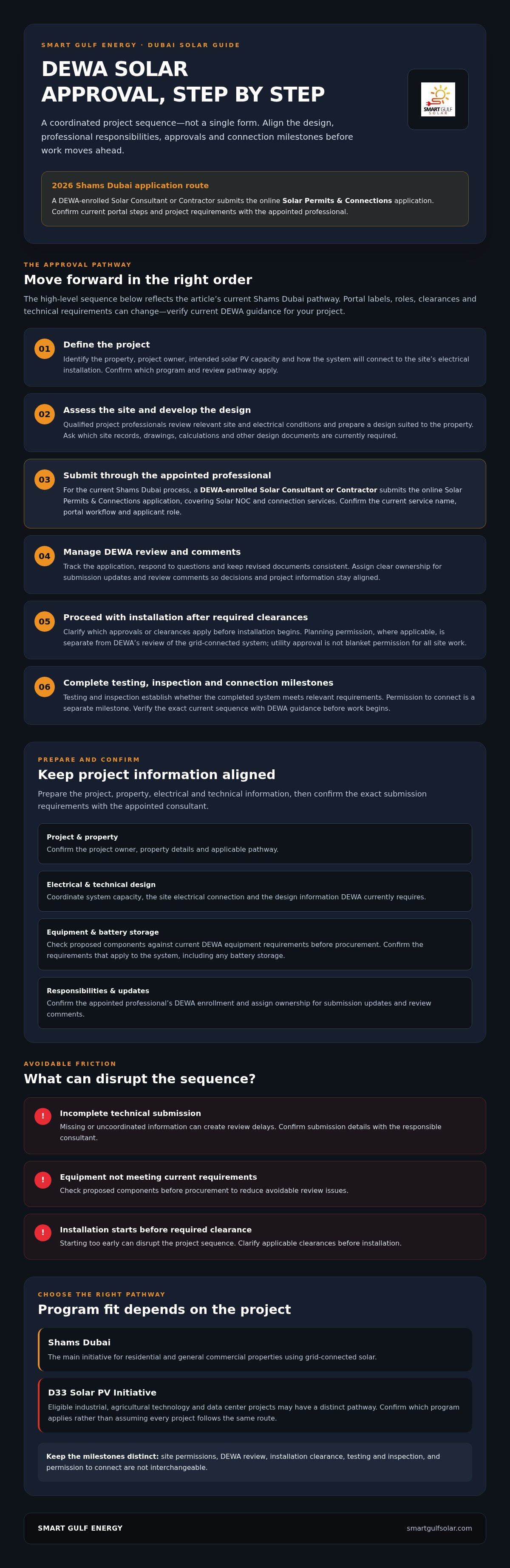
Move the project forward in controlled stages. The sequence below reflects the current high-level Shams Dubai pathway, but portal labels, applicant roles, required clearances, and technical submission details can change. Verify each procedural step against current DEWA guidance with the professional responsible for your application.
- Define the project. Identify the property, project owner, intended solar PV capacity, and how the system will connect to the site’s electrical installation. Confirm which program and review pathway apply.
- Assess the site and develop the design. Have qualified project professionals review relevant site and electrical conditions and prepare a design suited to the property. Verify which site records, drawings, calculations, and other design documents DEWA currently requires.
- Confirm the applicant and submission route. Under the current Shams Dubai process, a DEWA-enrolled Solar Consultant or Contractor submits the online Solar Permits & Connections application, which covers Solar NOC and connection services. Verify the current service name, portal workflow, and applicant role for your project before submission.
- Submit and manage review comments. The responsible professional submits the project information for DEWA review. Track the application, respond to questions, and keep revised documents consistent with the submitted design. Verify the current method for monitoring application status and sending responses.
- Proceed only after required clearance. A submitted application is not approval to procure or install. Confirm in writing which approvals or clearances are required before procurement and construction begin, and what conditions apply to the project.
- Complete installation, testing, and connection. After the relevant clearances, carry out the approved work and complete the required testing or inspection. Verify the current closeout evidence and final DEWA authorization needed before connecting or operating the system in parallel with the grid.
Start with project scope, site information, and system design
Build a clear project brief before submission. Include the site location, ownership or client responsibility, proposed capacity, electrical connection context, and intended scope. These inputs help the engineering team develop a coherent design instead of resolving basic assumptions during review.
Keep preliminary planning separate from authorization. Engineering can develop the information needed for review, but procurement and installation should follow the clearances required by DEWA and any other relevant authority. Ask the project professional to confirm the current document list for your site and system.
Submit, respond to review, and obtain the required clearances
Assign one accountable lead to maintain the application record, coordinate technical responses, and circulate approved revisions. This helps prevent mismatched drawings or equipment details from carrying into procurement and construction. Check the submission route and review requirements against current DEWA guidance.
An EPC team can coordinate design, permitting, procurement, installation, testing, and grid interconnection, while keeping each stage subject to the required approvals. For context on solar PV project delivery, consider how the scope and approval responsibilities fit together before installation is planned.
What documents and project details may be needed for DEWA review?
Prepare a project file before the application is assembled, but treat this as a planning checklist, not a definitive DEWA document list. Required document names, formats, and submission rules can depend on the project and may change. Confirm them through DEWA’s official channels and with the professional handling the submission. This preparation is an important part of how to get DEWA solar approval without assuming every project needs identical paperwork.
Complete, consistent project information supports an orderly review. Keep one controlled set of project details, drawings, and equipment information. If the design changes, update the related records so the application and planned installation continue to describe the same system.
Project and property information to prepare
Start with the information that identifies the project and clarifies who is responsible. Confirm which of the following items apply, then verify the required evidence and submission format for your project:
- Project details: site location, project scope, intended solar PV capacity, and a clear description of the proposed installation.
- Owner or applicant details: the relevant property owner, project client, and appointed applicant or contractor. Confirm the current DEWA process for identifying the submitting party.
- Property records: information that identifies the building and installation area. Depending on the site, check whether landlord, building management, or developer permissions are needed.
- Project context: whether the site is residential or commercial, and whether other site or authority permissions may apply.
Requirements can differ between residential and commercial projects. For a shared, leased, or developer-managed property, settle responsibility and permission questions early. Don’t assume the property owner’s approval covers every party or authority involved.
Technical information for a grid-connected solar PV system
Ask the design professional to identify the technical materials DEWA currently requests. Depending on the project, the preparation set may include the proposed system design, equipment schedules, electrical drawings, and details of protection and the grid connection. Treat these as items to verify, not a universal checklist.
- Design information: proposed system layout and capacity. Confirm the required drawing types and level of detail.
- Equipment information: panel, inverter, and other component details. Check the current DEWA List of Eligible Equipment and applicable registration requirements.
- Electrical information: drawings showing how the PV system relates to the building’s electrical installation, plus any protection details requested for review.
- Battery storage: if included, ask the consultant to confirm the latest DEWA requirements specific to storage connections.
Before submission, compare the drawings and schedules with the intended procurement and construction scope. If equipment or design details do not match, DEWA may raise questions or require revisions. Confirm current requirements before treating any prepared checklist as complete.
How to prevent approval delays and manage DEWA review comments
Unclear scope, inconsistent project data, and unanswered review comments can slow coordination. Treat these as practical risks to manage, not as an official DEWA list of rejection reasons. A document check before filing and a clear response process during review can help keep the project organized.
Before submission, compare the application details with the latest design package. Check that the site identification, proposed system scope, electrical drawings, and equipment schedules describe the same project. For example, if the drawings show different equipment from the schedule, clarify the intended design before filing.
Common submission problems to check before filing
- Inconsistent project details: Confirm that the site, proposed capacity, and project scope match across the application and supporting documents.
- Unaligned technical records: Compare drawings, equipment schedules, and design information. Make sure each reflects the configuration intended for the project.
- Outdated submission information: Verify the current forms, technical criteria, and submission route through official DEWA guidance before sending files.
- Unclear responsibility: Agree who will submit, track status, answer questions, and circulate revised documents. Confirm the responsible applicant or contractor for the current process.
These checks are project controls, not a guarantee of approval. Requirements can vary, so confirm the applicable criteria and document rules with the professional managing the submission.
What to do when DEWA requests clarification or revisions
Keep each review comment visible and traceable. Record the request, assign an owner, set an internal response target, and link the reply to the revised drawing or document. Submit coordinated revisions through the current process and retain the response and updated approval records in the project file.
If a comment requires a design change, check how it affects related drawings, equipment schedules, and procurement plans before sending an update. A change may require revised documents or further review. Verify the project-specific requirement with DEWA or the responsible consultant, and make sure an updated file does not create inconsistencies elsewhere in the submission.
For teams working through how to get DEWA solar approval, a single point of coordination can connect technical revisions with permitting and delivery decisions. Smart Gulf Energy’s EPC scope can include engineering, DEWA permitting, installation, testing, commissioning, and grid interconnection. Read more about solar project coordination and how these responsibilities can be organized.
From DEWA approval to installation and grid connection: plan the next steps
Approval is a handoff, not the finish line. Before moving from review into procurement or site work, confirm the project-specific clearances and conditions that apply. Then align construction, testing, and connection with the current DEWA process. Verify the inspection, testing, and grid-connection milestones for the project instead of assuming they are the same for every system.
A practical handoff keeps the reviewed design connected to the work on site. If the equipment, drawings, or scope change after review, pause and confirm whether updated documents or further clearance are required. This helps avoid a gap between what DEWA reviewed and what the project team installs.
Coordinate design, procurement, installation, and commissioning
Use the approved project information as the working reference for each delivery stage. Engineering defines the design, procurement follows its equipment schedule, and installation follows the applicable clearances. Testing and commissioning confirm the completed system against project requirements. Verify with the responsible professional which DEWA inspection, testing, and connection steps apply, and what records must be retained at closeout.
Set clear ownership for document control and authority communication. One lead should maintain the current drawing set, record revisions, coordinate responses, and confirm that the installation team is working from the latest approved information. This keeps design decisions, procurement, and site execution aligned without treating EPC coordination as a guarantee of approval or schedule.
When an EPC partner can support the approval journey
An EPC partner can coordinate connected project responsibilities rather than leaving design, permitting, and construction to operate as separate workstreams. Smart Gulf Energy is a Dubai-based solar EPC contractor operating since 2005. Its turnkey scope can include engineering, procurement, DEWA permitting, installation, testing, commissioning, and grid interconnection.
As you plan how to get DEWA solar approval, confirm who owns each submission, revision, clearance, and closeout record. Ask the project team to map the sequence against current DEWA requirements and the specific site conditions. Smart Gulf Energy can discuss the scope and coordination needs of your Dubai solar project. Discuss your Dubai solar project.
Set your Dubai solar project up for the next step
DEWA solar approval works best when the project sequence is clear from the start. Confirm the applicable pathway and current requirements, prepare consistent project and technical information, then track review comments and required clearances before installation. Approval, testing, and permission to connect are distinct milestones, so verify what applies to your project before each handoff.
Understanding how to get DEWA solar approval means more than preparing an application. It involves coordinating design, permitting, procurement, installation, and commissioning while keeping the project aligned with the information DEWA reviews. A clear owner for submissions and revisions helps maintain that alignment, but no contractor can guarantee approval or connection.
Smart Gulf Energy is a Dubai-based solar EPC contractor operating since 2005. Its turnkey scope can include DEWA permitting, installation, testing, and grid interconnection. To discuss your project scope and delivery requirements, discuss your Dubai solar project with Smart Gulf Energy. A coordinated plan gives your team a practical foundation for moving forward.
Frequently Asked Questions
How do I apply for DEWA solar approval in Dubai?
Work with a DEWA-enrolled Solar Consultant or Contractor to submit the application. The current Solar Permits & Connections service covers Solar NOC and connection services. Before filing, align the site details, project scope, system design, and technical documents, then verify current portal steps and submission requirements through DEWA guidance. The owner or facility team should also confirm who is responsible for application updates and responses to review comments.
Is DEWA approval required before installing solar panels in Dubai?
For a grid-connected solar PV project, build DEWA review and the required project clearances into the plan before installation proceeds. Don’t treat a submitted application, site permission, or planning approval as permission to connect to the grid. The exact clearance needed before work starts can depend on the project and current DEWA procedures, so ask the appointed consultant to confirm the applicable stages for your site.
What documents are needed for DEWA solar approval?
There isn’t one checklist that applies to every project. Preparation may include owner or applicant details, site identification, project scope, proposed system design, equipment information, electrical drawings, and protection details. Landlord, building management, or developer permissions may also be relevant to a particular property. Confirm current document names, formats, and technical submission requirements with DEWA and the professional managing the application.
How long does DEWA solar approval take?
DEWA’s Solar Permits & Connections service has been listed with a total stated timeline of 17 working days. Treat this as DEWA’s published service timeline, not a guaranteed project duration. The actual time can depend on the application, review comments, required revisions, and project-specific clearances. Check the current DEWA service information before planning procurement or installation, and ask the responsible consultant which milestones and review stages apply to your submission.
Can I install solar panels before DEWA approval?
Don’t begin installation until the required DEWA approval or clearance for your project has been confirmed. A submitted application is not the same as authorization to proceed, and the applicable requirements may distinguish design review, installation, testing, and grid connection. Confirm the permitted work stages for your project with the appointed consultant using current DEWA guidance. This helps prevent construction from moving ahead on a design or equipment scope that still needs review.
Who can submit a DEWA solar application?
A DEWA-enrolled Solar Consultant or Contractor submits the current Solar Permits & Connections application. Property owners, developers, and facility managers should coordinate with that professional, provide accurate project information, and clarify who will manage DEWA questions and revisions. Before appointing a contractor, verify its enrollment status through DEWA’s official information and confirm that the professional’s responsibilities cover the submission and project stages required for your installation.
What happens after DEWA approves a solar project?
Approval is a project milestone, not automatic permission to connect and operate the system. Confirm any conditions and remaining clearances, then coordinate procurement and installation against the reviewed design. The project may also need testing, inspection, or closeout documentation before final grid connection. Verify the current sequence and evidence required for your specific project with DEWA and the responsible consultant before moving between these stages.


