

What if the biggest risk in a solar project isn’t the equipment, but the gaps between the teams responsible for design, supply and construction? Solar engineering procurement construction brings these workstreams under one delivery model, but clear scope and handovers still matter. Owners need to know who coordinates each interface, which decisions they must make and when those decisions are needed.
A coordinated process can take a project from early design decisions through grid connection and commissioning. This guide explains how the EPC model works, what owners can expect at each stage and which responsibilities to clarify before work begins.
We’ll follow the delivery sequence from project requirements and engineering through equipment procurement, construction, permitting coordination, testing and handover. You’ll also see where approvals and grid interconnection fit, which scope questions to raise and what information to prepare. The goal is a clearer view of how each phase connects and where accountability should be defined.
Key Takeaways
- See how solar engineering procurement construction connects project requirements, design choices, equipment sourcing and site work under a coordinated scope.
- Use the project lifecycle to identify when decisions, approvals, testing and handover need to be addressed.
- Clarify owner inputs, EPC coordination duties and third-party interfaces in the contract and project documents.
- Prepare confirmed site and project information before requesting an EPC proposal, and flag assumptions that still need assessment.
- Understand the scope Smart Gulf Energy can cover, from concept and engineering through construction, commissioning and grid interconnection.
What Solar Engineering, Procurement and Construction Means for Project Owners
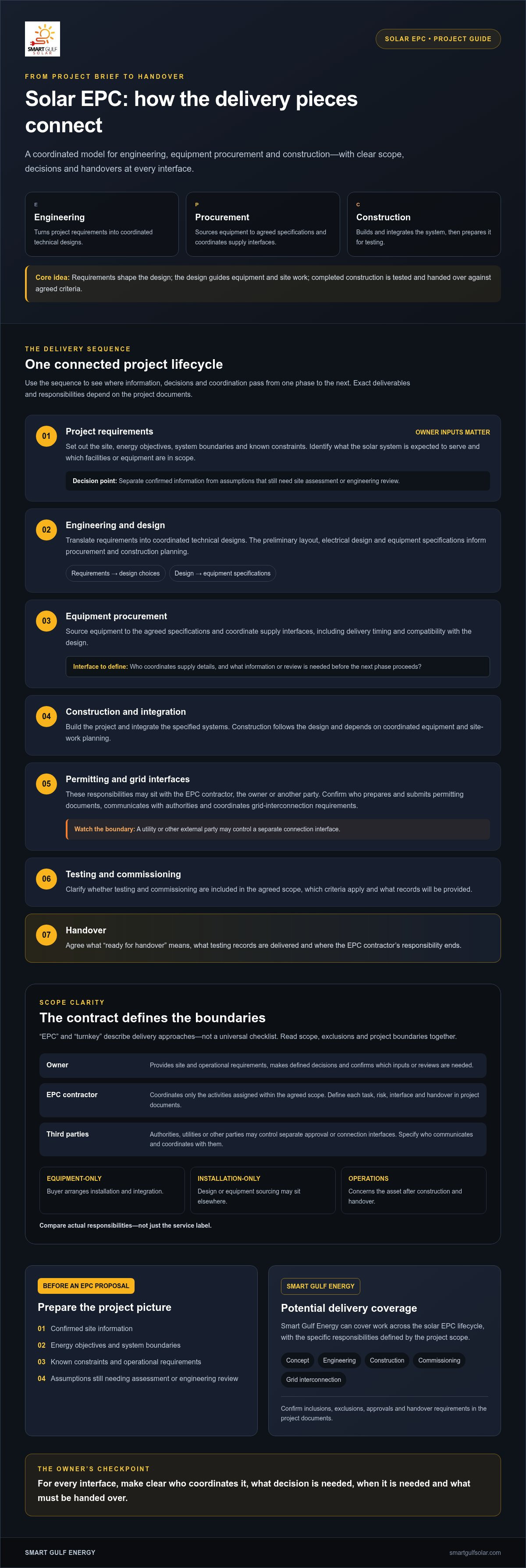
A solar EPC contract brings engineering, procurement and construction together under a coordinated project scope. For owners, this creates a defined delivery structure: technical decisions inform equipment specifications, procurement follows the design, and construction integrates the specified systems. The contract still determines which party owns each task, risk and handover.
Quotable definition: Solar engineering, procurement and construction combines technical design, specified equipment sourcing and physical project delivery into connected functions within an agreed scope.
What does EPC mean in a solar project?
Engineering turns project requirements into coordinated technical designs. These designs establish what equipment is needed, how components fit together and how site work should be planned. Procurement sources equipment to the agreed specifications and coordinates supply interfaces, including delivery timing and compatibility with the design. Construction builds and integrates the system, then prepares it for testing.
The phrase solar engineering procurement construction describes this connected delivery chain. The Engineering, procurement, and construction (EPC) model is a useful starting point for understanding how these functions can sit within one contract. In practice, project documents define the exact work and its boundaries.
This differs from equipment-only supply, where the buyer arranges installation and integration; installation-only work, where design or equipment sourcing may sit elsewhere; and long-term operations, which concern the asset after construction and handover. Compare the actual responsibilities, not just the service label. Confirm which activities the EPC scope includes and which remain with the owner or another party.
What does turnkey solar EPC mean?
Turnkey describes a delivery approach in which a contractor coordinates an agreed scope toward a defined handover point. It isn’t a universal checklist. One contract may include permitting coordination, testing, commissioning or grid-interconnection work, while another may assign some of those interfaces to the owner or third parties.
Read the contract scope, exclusions and project boundaries together. Confirm who prepares and submits permitting documents, who communicates with relevant authorities, and who coordinates grid-interconnection requirements. Also clarify what “ready for handover” means, what testing records will be provided and where the EPC contractor’s responsibility ends.
For example, an owner may provide site and operational requirements while the EPC contractor develops the design and coordinates equipment and construction. A utility or other external party may control a separate connection interface. The actual division depends on the project documents. Put each responsibility in writing before work starts, especially when one party’s deliverable must be reviewed or accepted before another can proceed.
How Solar EPC Moves from Project Requirements to an Operating Asset
A solar EPC project advances through linked decisions, not isolated work packages. Requirements shape the design; the design sets equipment specifications and construction needs; and completed construction must be tested and handed over against agreed criteria. Quotable principle: Engineering, procurement and construction decisions need to stay coordinated because each phase sets the conditions for the next.
The sequence below is a useful planning framework. Actual deliverables, approvals and handover requirements depend on the project, contract and relevant authorities. For an overview of how the EPC project delivery method works, see McCarthy Building Companies’ explanation of the delivery model.
From project brief to engineered design
Start with the site, energy objectives, system boundaries and owner requirements. Clarify what the solar system is expected to serve, which facilities or equipment fall within the project and what constraints the owner already knows about. Separate confirmed information from assumptions that need site assessment or engineering review.
That initial picture informs the preliminary layout, electrical design and equipment specifications. Those choices guide procurement and construction planning. Detailed design documents vary by project, so owners should confirm which drawings, calculations and technical schedules are included rather than assume a standard package. Design should also account for interfaces with existing site infrastructure and the external connection point.
From procurement and construction to handover
Once the design basis and equipment requirements are established, procurement can source the specified components and coordinate deliveries with the construction sequence. Site preparation and installation then follow the agreed project plan. Changes to equipment or design can affect supply coordination and site work, so route proposed changes through a defined review process.
After installation, the project moves into inspection, testing and commissioning, followed by handover of the records and documents agreed in the contract. Define acceptance criteria and required handover materials before construction is complete. Detailed test procedures belong in the commissioning plan and project documents, rather than being assumed from a generic EPC description.
Permitting and grid connection need deliberate, project-specific planning in the UAE. Requirements and responsibilities can depend on the location, project and relevant authority. Verify current requirements for the project, and confirm in the contract who coordinates submissions, external interfaces and connection activities. Don’t assume those duties are automatically included in every EPC scope.
For owners preparing a project brief, Smart Gulf Energy’s solar PV EPC installation information can provide a starting point for discussing project scope and delivery needs.
Where Solar EPC Scope, Responsibilities and Project Interfaces Meet
A turnkey label doesn’t establish that every service, risk or interface is included. In solar engineering procurement construction, accountability depends on the agreed scope, exclusions and boundaries between the owner, EPC contractor and other parties.
Quotable principle: EPC accountability is defined by the contract scope, stated exclusions and the interfaces each party agrees to manage.
Which responsibilities should the contract define?
Use the contract and project documents to confirm who supplies each deliverable, who coordinates dependencies and who accepts the completed work. A responsibility matrix can make gaps easier to spot:
- Owner inputs: Provide agreed site and operational information, enable site access, appoint any separate suppliers and make required project decisions.
- EPC coordination: Deliver only the design, equipment, construction and project coordination activities stated in the contract. Check specifically for permitting coordination, utility interfaces, testing, commissioning and handover records.
- Third-party interfaces: Identify activities controlled by a utility, authority, landlord or owner-appointed supplier, including required submissions, reviews and connection dependencies.
This matrix is a planning aid, not a substitute for contract review. Confirm design deliverables, equipment boundaries and construction limits, including owner-supplied items or work by others. Spell out who coordinates each permitting and utility interface, and who provides the information or approvals needed for work to proceed.
Warranties, operations and maintenance aren’t automatically part of EPC delivery. Check whether they’re included, who provides them, what they cover and when responsibility transfers. The same applies to defect correction and support after handover. Write down the agreed terms rather than relying on the word “turnkey.”
How should owners check project interfaces?
Map each handoff among the owner, EPC contractor, utility and other appointed suppliers. For every interface, record the input required, the party responsible for providing it, the party that reviews or accepts it, and when it is needed in the project.
Pay close attention to dependencies such as site access, information about existing electrical infrastructure, owner decisions and external reviews. For a UAE project, verify current approval requirements for its location and scope. Refer to a dedicated DEWA permitting guide for detailed DEWA-related steps, and confirm the project-specific division of permitting and grid-interconnection responsibilities in the contract.
Before signing, compare the responsibility matrix against the proposal, exclusions and project documents. Resolve any gap where a task is assumed by one party but assigned to none. That step turns a broad EPC description into a workable basis for coordination and accountability.
What Project Owners Should Prepare Before Starting Solar EPC
A focused project brief helps an EPC contractor distinguish verified requirements from open questions. For solar engineering procurement construction, early clarity on the site, operating objectives and known constraints gives the project team a stronger basis for defining the work. It doesn’t replace site assessment or engineering validation.
What information belongs in an initial project brief?
Assemble the information you can confirm, then flag anything that needs checking. A useful brief includes:
- Site and facility: Location, facility use, access arrangements and available site or building drawings.
- Existing infrastructure: Known electrical infrastructure and records that describe the current installation. Identify missing or outdated information.
- Project objectives: The intended role of the solar system, operational needs and the boundaries of the facilities or loads under consideration.
- Constraints and governance: Known site restrictions, project dependencies, decision-makers and the process for reviewing or approving design decisions.
- Utility context: Available information about the relevant utility interface and any requirements already confirmed for the project location.
Label each item as confirmed, assumed or unknown. For example, an existing drawing may be available but not verified against current site conditions. Treat it as a reference, not a design commitment. Site access, actual infrastructure and project-specific utility requirements should be validated before the design is fixed. Current UAE or emirate requirements also need to be checked for the specific project.
What should an EPC proposal make clear?
Assess the proposal for scope and decision points, not just its headline description. Check which design and construction deliverables are included, what equipment boundaries apply and which assumptions or exclusions could change the work. The proposal should also identify the owner’s inputs and responsibilities.
Ask how the proposed delivery addresses permitting and grid-interconnection coordination, testing, commissioning and handover. Confirm which party coordinates each external interface, what records are expected at handover, and which approvals or decisions depend on the owner or a third party. Don’t assume the word “turnkey” answers these questions.
Review the proposed milestones and the contractual process for changes, delays and third-party dependencies. Site conditions or validated utility requirements may affect the design and scope, so establish how new information is assessed and approved. Scope, site conditions and contract boundaries shape a proposal. Don’t treat an early outline as a fixed design.
With the brief assembled, owners can discuss a solar PV EPC project with Smart Gulf Energy and identify which inputs need validation before the scope is defined.
How Smart Gulf Energy Delivers Solar EPC from Design Through Commissioning
Smart Gulf Energy provides a UAE-based example of how these project stages can be coordinated. The Dubai-based contractor has operated since 2005 and serves residential, commercial and utility project types.
What does Smart Gulf Energy's solar EPC scope cover?
Smart Gulf Energy’s turnkey solar PV contracts cover concept development, engineering, procurement and construction, followed by permitting coordination, testing, commissioning and grid interconnection. The agreed contract defines the specific scope and how responsibilities are allocated for each project.
Connecting these stages gives owners a clear point of coordination for design decisions, equipment sourcing and construction interfaces. For example, the project team can trace how an engineering requirement informs equipment specifications and site planning, then clarify how those elements connect to testing and handover. This coordination helps define who manages each interface. It doesn’t remove project risks or make external approvals and connections automatic.
Confirm the boundaries directly. Ask what permitting coordination covers, which party handles each grid-interconnection activity, and what testing and handover records the contract includes. Requirements vary by project and location, so validate applicable UAE requirements and responsibilities during early scoping.
What is a practical next step for a project owner?
Prepare the site location, available drawings, facility objectives and known electrical or grid context before an initial discussion. Mark details that are confirmed separately from assumptions that still need assessment. This helps identify the decisions and information required to define the project scope.
Then review the project boundaries with the EPC contractor. Clarify owner inputs, contractor responsibilities, permitting needs and third-party interfaces before treating the delivery plan as settled. Smart Gulf Energy also delivers other clean technology projects, but for a solar EPC discussion, keep the initial brief focused on the PV system and its site and grid context.
To discuss project requirements and the potential EPC scope, Discuss a solar EPC project with Smart Gulf Energy.
Set Clear Scope Before Your Solar Project Moves Forward
Solar EPC delivery works best when design choices, equipment requirements and construction responsibilities are aligned from the outset. Define project requirements early, separate confirmed site information from assumptions, and document scope, exclusions, interfaces and handover criteria. The contract, not the turnkey label, defines deliverables and responsibility allocations.
A well-defined solar engineering procurement construction scope makes the delivery sequence visible and clarifies who is responsible at each handoff. Owners should be ready to discuss site conditions, operational objectives and decision-making roles. Permitting and grid-connection responsibilities also need to be confirmed for the specific project.
Smart Gulf Energy is a Dubai-based solar EPC contractor operating since 2005. Its solar PV scope covers delivery from concept through engineering, procurement, construction, permitting coordination, testing and commissioning, with grid interconnection addressed within the agreed project scope.
Ready to move from project brief to a scope discussion? Discuss your solar EPC project with Smart Gulf Energy. Bring your site details, objectives and known grid context. Clear questions are a strong starting point for a coordinated project.
Frequently Asked Questions
What does solar engineering, procurement and construction include?
Solar engineering procurement construction, or EPC, brings technical design, equipment sourcing and project construction together under an agreed scope. Engineering turns owner requirements into coordinated designs. Procurement sources equipment to those specifications and manages supply interfaces. Construction builds and integrates the system in preparation for testing. The contract defines the exact deliverables, exclusions, responsibilities and handover requirements, so EPC scope can differ from one project to another.
What is the difference between solar EPC and a solar installer?
A solar installer may focus on installing equipment, while an EPC contractor can coordinate engineering, procurement and construction within one project scope. The terms aren’t always used consistently, so compare actual responsibilities rather than job titles. Check who designs the system, selects or sources specified equipment, manages site work and coordinates interfaces. Also confirm whether testing, commissioning and handover are included or assigned to the owner or another party.
Does a turnkey solar EPC contract include permits and grid connection?
Not automatically. “Turnkey” describes a delivery approach, not a universal list of services. Some contracts include permitting coordination or grid-interconnection activities; others assign parts of this work to the owner or third parties. Review the scope and exclusions to establish who prepares submissions, coordinates with relevant authorities or utilities, and provides required information. For UAE projects, verify current requirements and the precise allocation for the project location.
What are the main stages of a solar EPC project?
A typical high-level sequence is to define project requirements, develop the engineering design, procure specified equipment, prepare the site and build the system, then inspect, test, commission and hand it over. These stages depend on one another: design informs equipment specifications and construction planning, while completed installation must be checked against agreed criteria. The contract and project documents determine specific deliverables, approvals, milestones and acceptance requirements.
What should I prepare before requesting a solar EPC proposal?
Prepare the site location, facility use, available drawings and information about existing electrical infrastructure. State the project objectives, known constraints, operating needs, decision-makers and any available utility context. Mark information as confirmed, assumed or unknown. For example, an existing drawing may not reflect current site conditions. This preparation helps the EPC contractor identify what can inform early scoping and what needs validation through engineering or site assessment.
Does solar EPC include operations and maintenance after commissioning?
Not by default. EPC commonly covers delivery through construction and an agreed testing, commissioning or handover point, but ongoing operations and maintenance depend on the contract. Before signing, ask whether post-handover services are included, who provides them, what tasks they cover and how long the obligations apply. If they’re excluded, establish who will be responsible for operating and maintaining the completed system after the EPC scope ends.
How is solar EPC delivered in the UAE?
Solar EPC in the UAE follows the project’s agreed scope, location-specific requirements and external interfaces. Owners should verify current permitting needs for the relevant emirate and confirm who coordinates submissions, utility discussions, grid interconnection, testing and handover. Smart Gulf Energy is a Dubai-based solar EPC contractor operating since 2005. Its solar PV scope runs from concept through commissioning, with responsibilities set out for each project in its contract.


